🧠 Core Principles of Ayurveda
Their Importance and Relevance in Today's Life
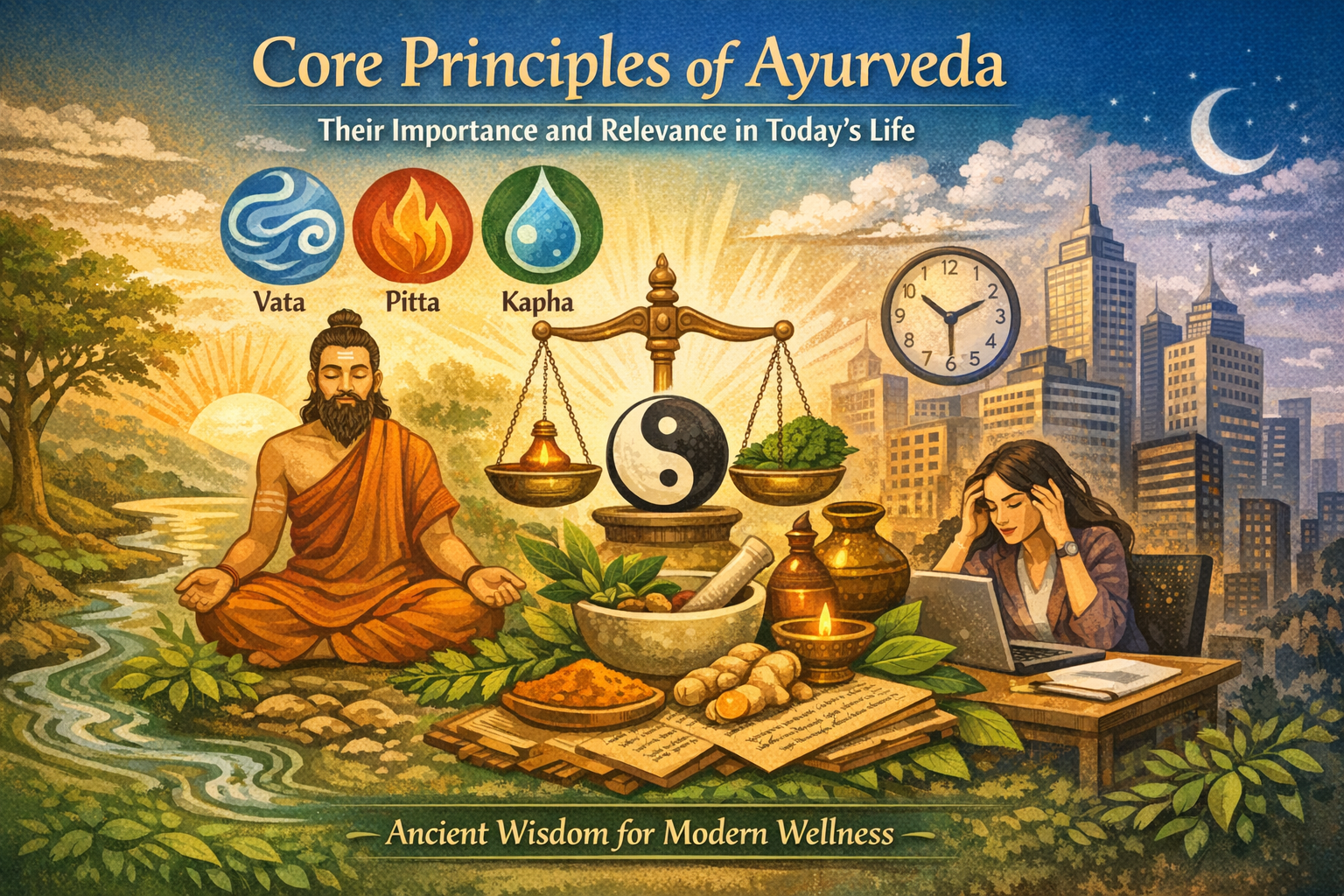
In a world driven by speed, convenience, and constant stimulation, health problems have quietly become lifestyle problems. Stress, poor digestion, sleep disorders, and chronic fatigue are now common across all age groups.
While modern medicine treats symptoms effectively, many people still search for balance, prevention, and long-term well-being. Ayurveda offers that missing foundation. Not as an outdated tradition, but as a practical life science built on principles that remain surprisingly relevant today.
🌱 What Makes Ayurveda Different?
Ayurveda does not define health as the absence of disease. It defines health as a state where the body, mind, digestion, sleep, and emotions function in harmony.
Its principles focus on:
- ✅ Understanding individuality
- ✅ Maintaining balance
- ✅ Preventing imbalance before disease begins
- ✅ Aligning daily life with nature
These ideas feel even more necessary in today's lifestyle-driven health challenges.
⚖️ The Core Principles of Ayurveda Explained
1
⚖️
Balance Is the Foundation of Health
Ayurveda teaches that health exists when everything is in balance. This includes digestion, sleep, mental state, physical activity, and emotions.
Modern relevance: Irregular routines, late nights, and processed foods disturb balance. Ayurvedic thinking encourages restoring rhythm instead of relying only on medication.
2
🔄
The Tridosha Principle
Every individual is governed by a unique combination of three energies: Vata (movement), Pitta (digestion), Kapha (structure).
Modern relevance: This explains why the same diet or fitness plan doesn't work for everyone. Ayurveda promotes personalized health rather than one-size-fits-all solutions.
3
🔥
Agni: The Power of Digestion
Agni represents digestive and metabolic strength. Strong digestion means better immunity, energy, and clarity.
Modern relevance: Even healthy food can cause problems if digestion is weak. Ayurveda prioritizes gut health, which modern science now recognizes as central to wellness.
4
🛡️
Prevention Over Cure
Ayurveda focuses on preventing disease through daily habits, diet, and seasonal adjustments.
Modern relevance: Lifestyle disorders like diabetes, obesity, and stress-related illness can often be prevented with early corrections rather than late treatment.
5
🕰️
Living in Harmony with Nature
Ayurveda emphasizes alignment with natural cycles such as day, night, and seasons.
Modern relevance: Disrupted sleep, screen exposure, and indoor lifestyles disconnect us from natural rhythms. Ayurvedic principles restore this lost alignment.
6
🧠
Mind and Body Are Interconnected
Mental stress directly affects physical health. Ayurveda treats the mind and body as one system.
Modern relevance: Anxiety, burnout, and emotional fatigue are now major health issues. Ayurveda integrates mental calmness into physical wellness.
7
📅
Daily Habits Shape Long-Term Health
Ayurveda highlights the power of small, consistent daily actions.
Modern relevance: Irregular eating, skipped meals, and poor sleep accumulate into long-term health issues. Structured daily habits prevent this slow decline.
🌍 Why Ayurveda Still Matters Today
Ayurveda remains relevant because it:
- ✅ Supports preventive healthcare
- ✅ Encourages self-awareness
- ✅ Promotes sustainable habits
- ✅ Reduces dependency on quick fixes
- ✅ Aligns health with lifestyle
It does not reject modern medicine. It complements it by filling gaps that technology alone cannot address.
⚖️ Ayurveda as a Lifestyle, Not a Treatment
Ayurveda works best when practiced as a way of life. It encourages:
🍽️ Mindful eating
😴 Adequate rest
⚖️ Balanced work
🧠 Emotional regulation
🌿 Connection with nature
This approach makes health sustainable rather than reactive.
❓ Frequently Asked Questions (FAQs)
Are Ayurvedic principles applicable in modern lifestyles?
Yes. They can be adapted easily to busy schedules and modern routines.
Does Ayurveda conflict with modern medicine?
No. Ayurveda complements modern healthcare by focusing on prevention and lifestyle balance.
Is Ayurveda only for people with health problems?
No. Ayurveda is primarily preventive and beneficial for maintaining long-term wellness.
How long does it take to see benefits?
Improvements in digestion, energy, and mental clarity may appear within a few weeks of consistent practice.
Can Ayurveda help manage stress?
Yes. Ayurveda integrates mental balance as a core principle of health.
🌟 Ancient Principles for Modern Living
The core principles of Ayurveda are not outdated ideas. They are timeless guidelines for living well.
In a world of fast solutions and rising health concerns, Ayurveda offers something rare: balance, awareness, and sustainability.