🌿 Ayurveda in 2026
How Ancient Herbal Science Fits Modern Preventive Healthcare
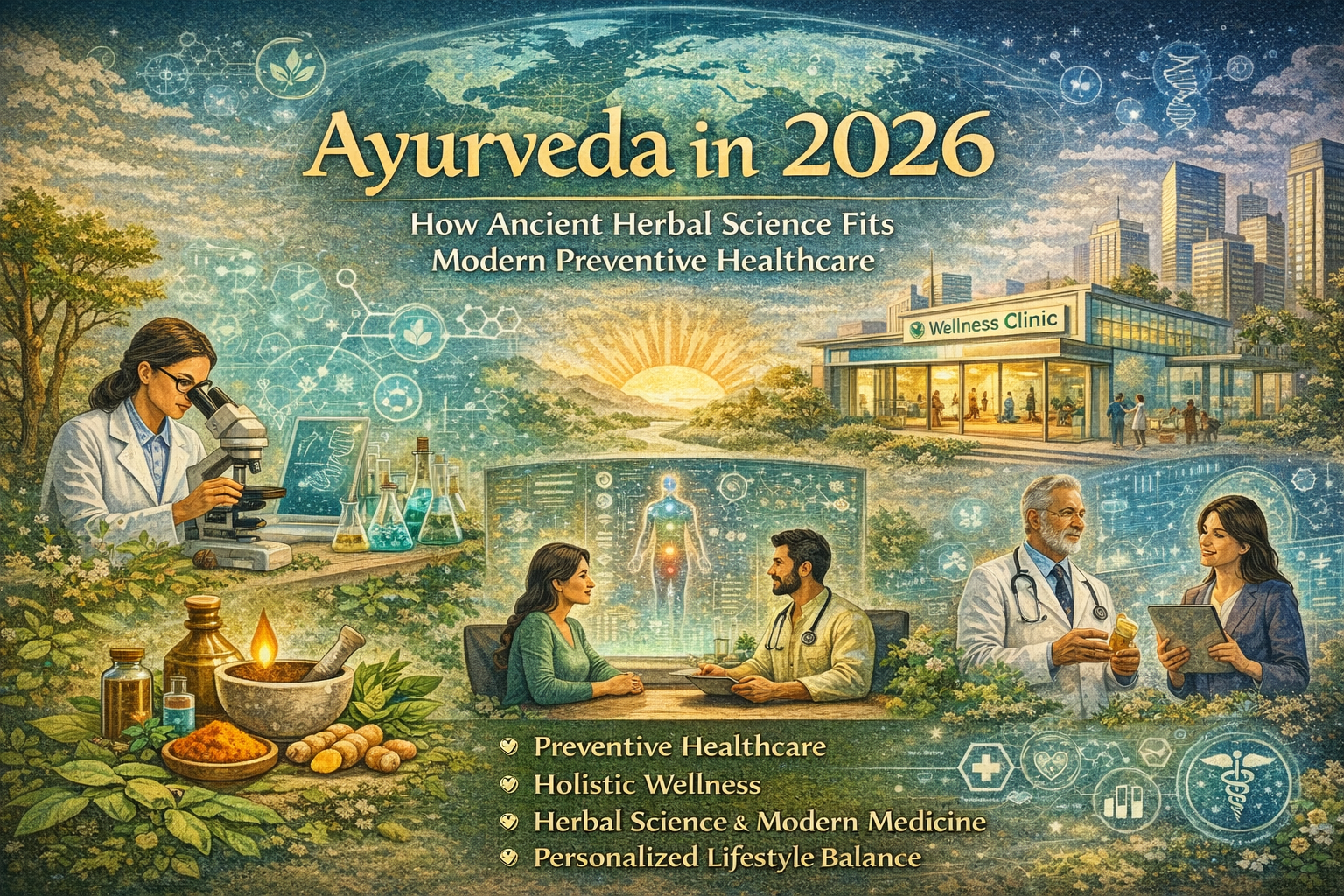
Healthcare in 2026 is no longer reactive. The global focus has shifted from treating disease to preventing it before it begins. Rising lifestyle disorders, mental health concerns, and chronic inflammation have reshaped how people think about wellness.
In this evolving landscape, Ayurveda has re-emerged not as an alternative, but as a foundational system of preventive healthcare. What makes Ayurveda relevant in 2026 is not nostalgia. It is precision, personalization, and its deep understanding of the human body as an interconnected system.
🔬 The Shift Toward Preventive Healthcare
Modern healthcare systems are under pressure. Chronic diseases linked to stress, poor nutrition, and sedentary habits account for a significant portion of healthcare costs worldwide. As a result, preventive healthcare has become a global priority.
Preventive healthcare today focuses on:
- Early risk identification
- Lifestyle-based disease prevention
- Long-term metabolic and immune balance
- Mental and emotional resilience
Ayurveda has followed this model for thousands of years.
🧠 Ayurveda's Preventive Philosophy
Ayurveda does not wait for symptoms to appear. It focuses on maintaining equilibrium within the body through daily habits, nutrition, herbal support, and seasonal alignment.
At its core, Ayurveda works on three preventive principles:
⚖️
Balance Before Breakdown
Maintaining equilibrium prevents disease before symptoms appear
🌱
Root-Cause Correction
Addressing imbalances at their source, not just symptoms
👤
Individualized Care
Personalized solutions based on unique body constitution
🌿 Herbal Science in the Age of Evidence
One of the biggest changes shaping Ayurveda in 2026 is scientific validation. Herbal formulations are now backed by:
- Clinical research validating traditional knowledge
- Standardized extraction methods for consistency
- Quality-controlled manufacturing standards
- Bioavailability enhancement techniques
Ancient herbs are being studied through modern lenses such as pharmacology, nutraceutical science, and functional medicine. This bridges the gap between tradition and trust.
🕒 Daily Preventive Care the Ayurvedic Way
Preventive healthcare in Ayurveda is built on everyday consistency rather than intensive intervention.
Core daily practices include:
-
1
Digestive support through mindful eating
Eating according to digestive capacity and food compatibility
-
2
Herbal supplementation based on need
Targeted herbs for specific imbalances and seasonal needs
-
3
Stress regulation through routine alignment
Daily rhythm synchronized with natural circadian cycles
-
4
Seasonal lifestyle adaptation
Adjusting habits according to environmental changes
-
5
Sleep and circadian rhythm balance
Quality rest as foundation of preventive health
❓ Frequently Asked Questions (FAQs)
Why is Ayurveda relevant in 2026?
Ayurveda aligns perfectly with modern preventive healthcare by focusing on early imbalance correction, lifestyle medicine, and long-term wellness.
Is Ayurveda scientifically supported today?
Yes. Many Ayurvedic herbs and practices are now validated through modern research, clinical trials, and standardized formulations.
Can Ayurveda be combined with modern medical care?
Absolutely. Ayurveda works best as a complementary system that supports prevention alongside modern diagnostics and treatment.
Is Ayurveda only for people with health issues?
No. Ayurveda is primarily preventive and suitable for individuals who want to maintain health, energy, and balance before illness develops.
How soon can preventive benefits be noticed?
Preventive benefits develop gradually. Improvements in digestion, energy, sleep, and stress management are often noticed within weeks of consistent practice.
🌍 The Future of Healthcare Is Holistic
Ayurveda in 2026 is not about revisiting the past. It is about using ancient intelligence to solve modern health challenges.
The future of healthcare is better living. Ayurveda shows us how.
← Explore Ayurveda Wellness Blog